
Strawberry Mulch Systems: What Actually Works in Long-Cycle Production
Strawberries are not a short-cycle crop
They are one of the longest and most demanding mulch applications in agriculture.
If a mulch system cannot survive early UV exposure, exposed shoulders, winter dormancy, and spring reactivation — it will fail in strawberries.
This is why most compostable mulch films fail here first.
And why strawberries are the real test of durability.
What Proper Strawberry Performance Looks Like
A strawberry-ready mulch must:
• Stay intact through extended UV exposure
• Resist breakdown on exposed bed shoulders
• Handle freeze–thaw cycles and winter dormancy
• Maintain weed suppression through establishment
• Break down only after incorporation into soil
This is not short-cycle performance.
This is durability engineering.
Strawberries Are Not One System — They Are Three
1. Matted Row (Northern Systems)
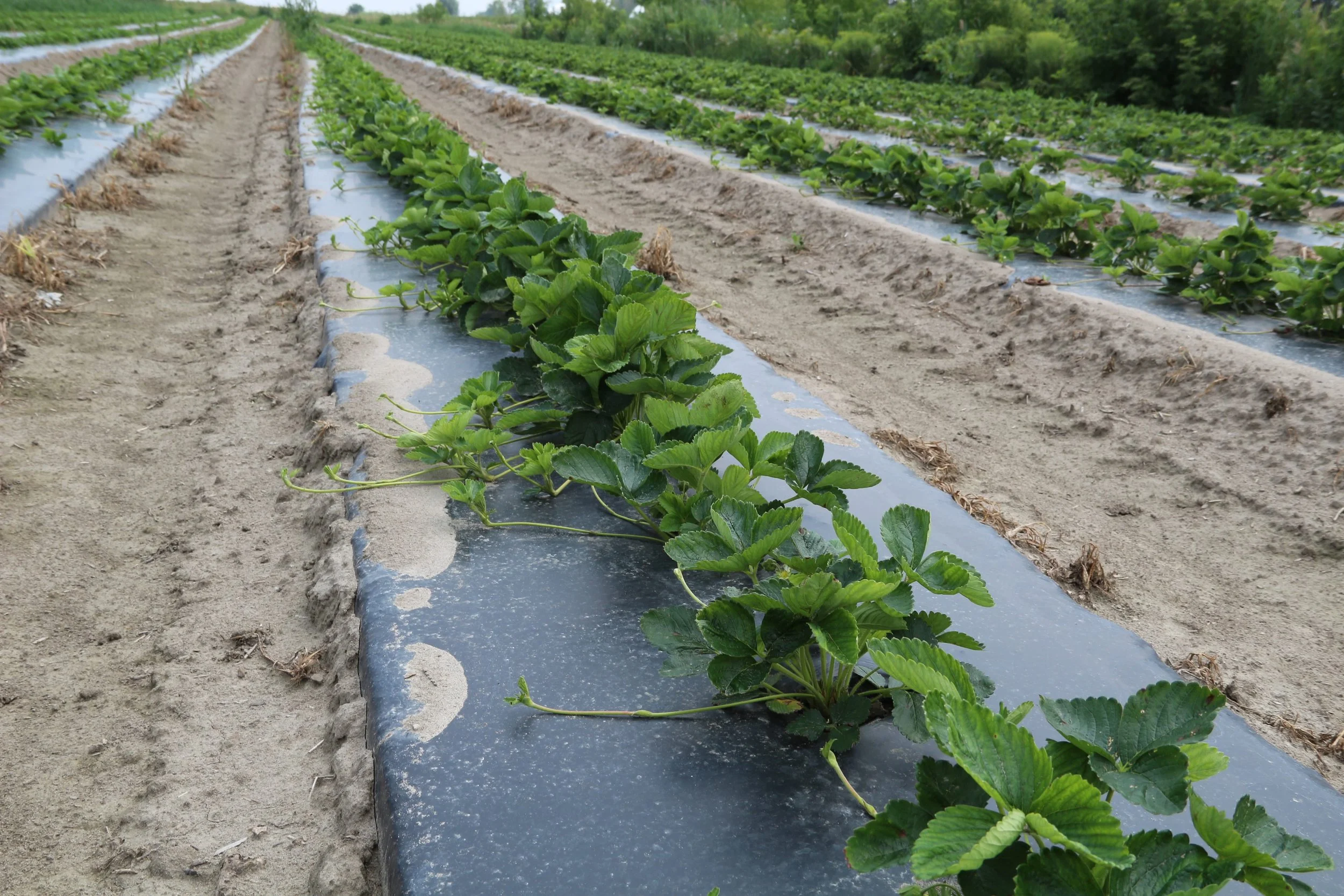
FilmOrganic Black #36 installed in a northern matted row strawberry system.
FilmOrganic mulch is placed at establishment, allowing mother plants to develop in a weed-free environment from day one. By suppressing early competition, FilmOrganic reduces hand-weeding labor and improves nutrient availability for uniform crown development. At the end of the cycle, FilmOrganic compostable mulch is incorporated directly into the soil — no plastic removal, no disposal logistics.
The most logical application for compostable mulch.
Installed at establishment to suppress early weed pressure and reduce hand labor.
In northern climates, this system benefits from:
• Cleaner establishment
• Reduced early competition
• Lower labor pressure
At the end of the cycle:
No plastic removal
No disposal
No microplastic residue in soil
2. Annual Plasticulture (Spring Plant → Fall Harvest)
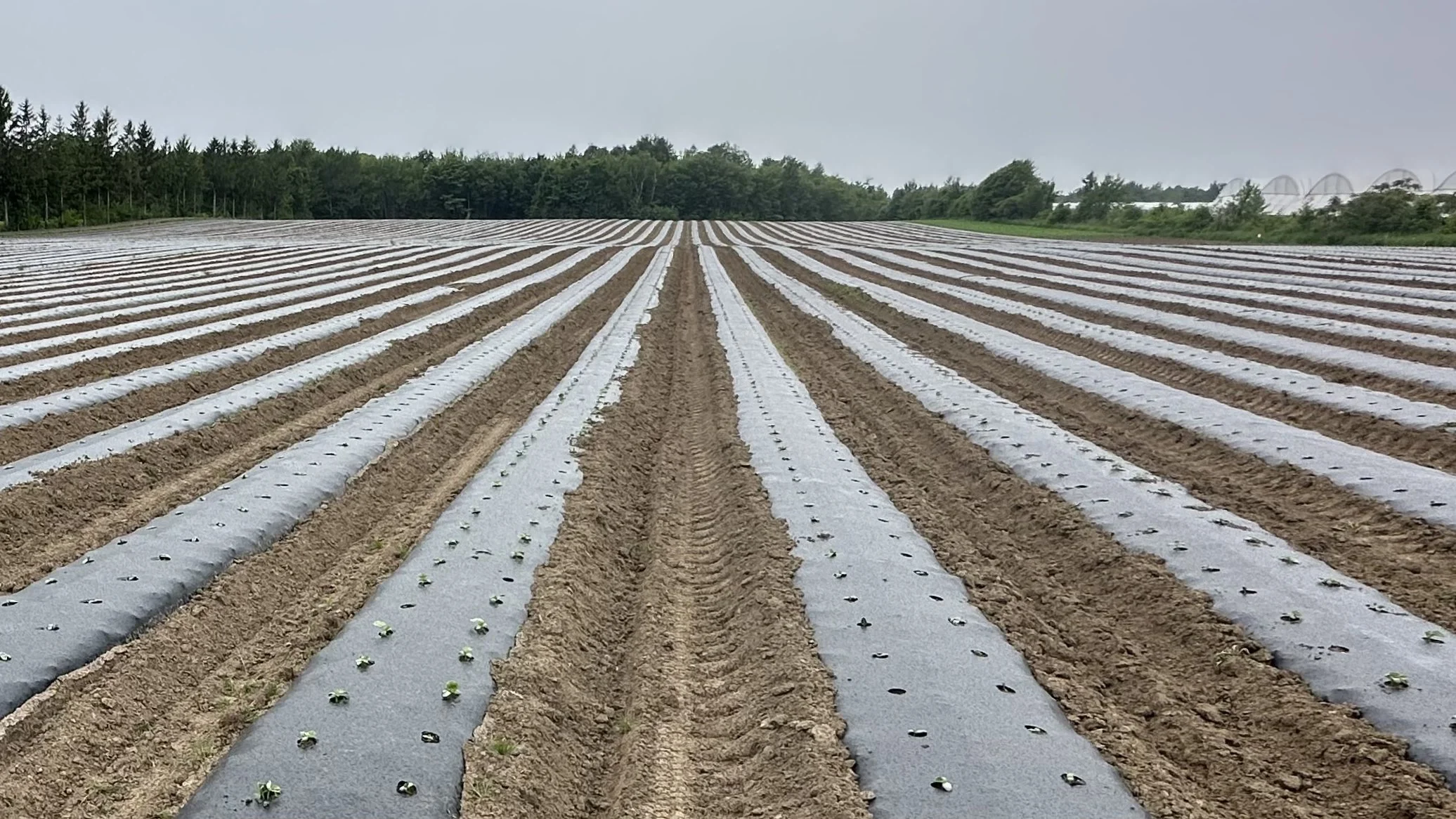
Annual strawberry plasticulture using FilmOrganic Black #66.
Engineered for peak summer UV exposure and exposed bed shoulders, FilmOrganic maintains structural integrity through the full harvest window. Designed for 5–7 month field duration, FilmOrganic Black #66 delivers consistent weed suppression without premature embrittlement. After harvest, FilmOrganic compostable mulch eliminates the need for plastic removal, saving labor and preserving soil integrity.
Shorter cycle — but still demanding.
The mulch must:
• Handle peak summer UV
• Stay intact on exposed shoulders
• Maintain consistency until final harvest
If durability is insufficient, breakdown begins before harvest.
This is where most systems fail.
3. Winter-Over Systems
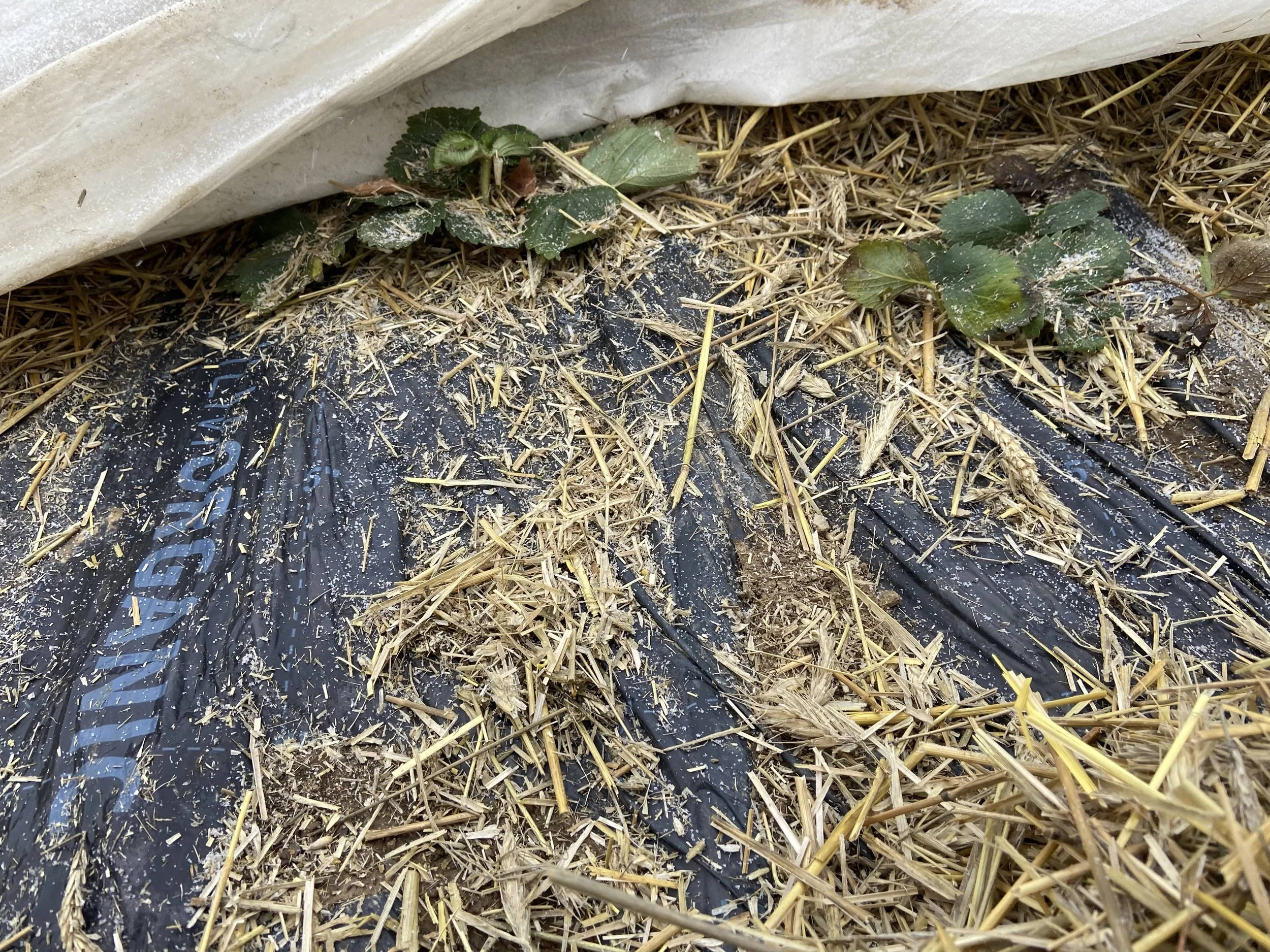
Winter-over strawberry production with FilmOrganic Black #88.
Specifically engineered for long-cycle durability, FilmOrganic Black #88 supports late summer or early spring planting systems exposed to extended UV, moisture, and freeze–thaw cycles. When used with row cover protection, FilmOrganic maintains flexibility and performance throughout dormancy and spring harvest. At incorporation, FilmOrganic biodegrades in soil — no retrieval, no landfill, no residual plastic.
The most demanding mulch system in agriculture.
Late summer planting → winter dormancy → spring harvest.
This exposes mulch to:
• Extended UV exposure before canopy closure
• Freeze–thaw cycles
• Moisture saturation
• Wind stress in early spring
Without proper engineering, degradation starts too early.
Row cover is required for protection — but mulch durability remains critical.
Why Strawberries Reveal Weakness
Most compostable mulch films fail in strawberries before any other crop.
Why?
Because strawberries expose:
• Weak UV stabilization
• Poor flexibility under stress
• Premature breakdown under moisture
Tomatoes may tolerate it.
Strawberries will not.
What Actually Controls Mulch Film Durability
Durability is not defined by thickness.
It is controlled by formulation.
A mulch film must balance:
• UV stability
• Flexibility under stress
• Controlled biodegradation
Get this wrong — and the film fails before the crop is finished.
Get it right — and the film stays intact through the full cycle, then breaks down cleanly after incorporation.
Why Strawberry Growers Are Re-evaluating Mulch Systems
Strawberry production places unique demands on mulch durability.
Growers need systems that:
• remain stable through dormancy
• support early spring plant development
• maintain bed structure through harvest
• avoid plastic removal at the end of the season
This is why many farms are evaluating compostable mulch systems engineered specifically for longer exposure timelines.
Because in strawberries, durability is not optional.
It is the foundation of the system.
Match the Right System to Your Strawberry Production
Different strawberry systems require different durability classes.
Summer planting.
Early spring planting.
Short harvest windows.
Extended harvest cycles.