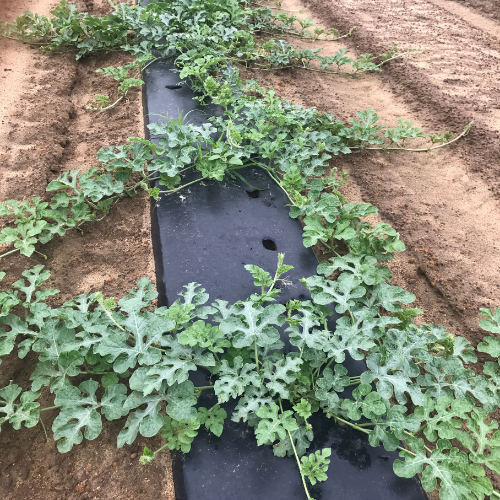
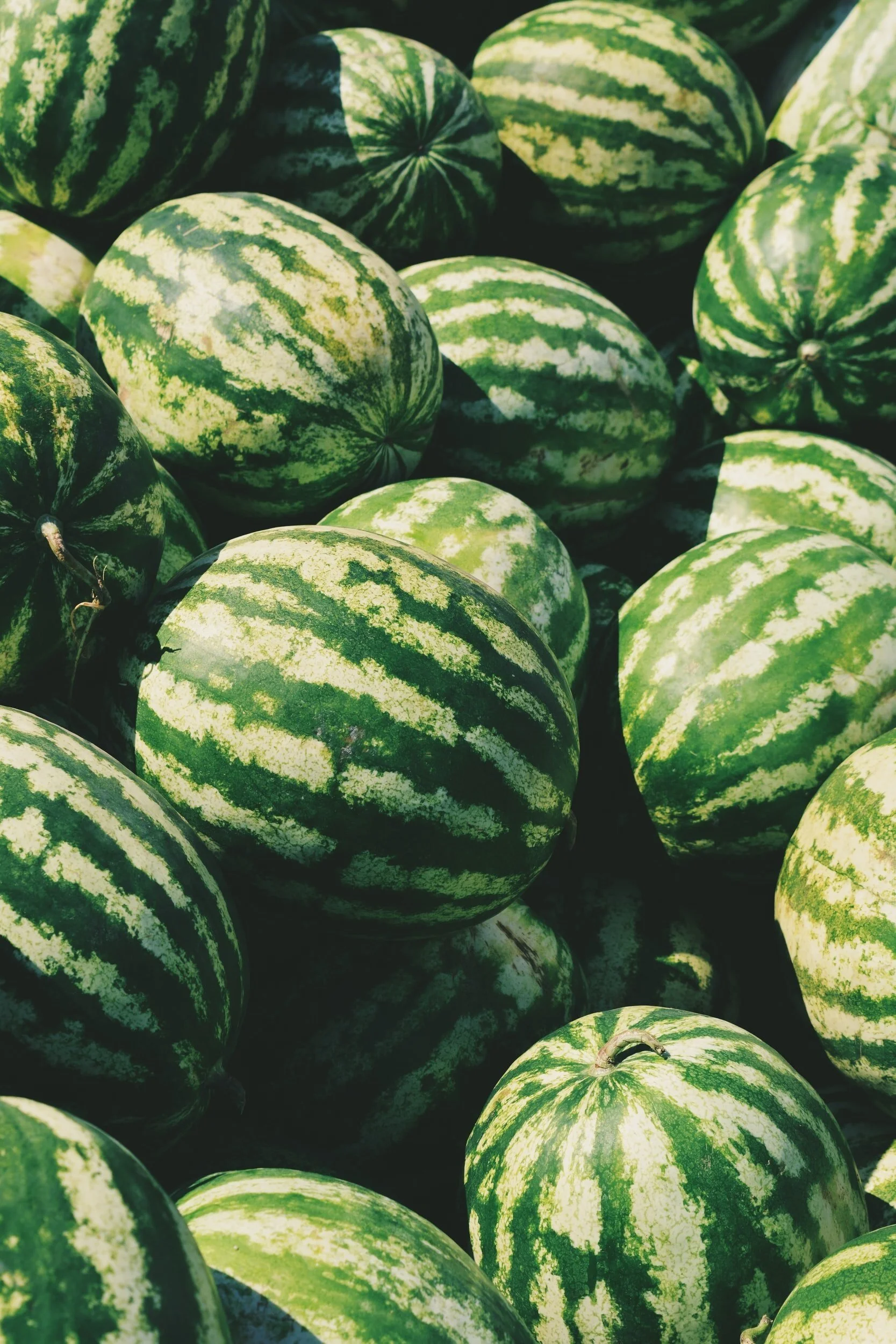
Compostable Mulch Film for Watermelon

Find the right product

Answer a few quick questions (60 seconds) — we’ll recommend the right film and reply within 24 hours.

Same performance as plastic — without the plastic.

FilmOrganic compostable mulch films deliver the same field performance as polyethylene or oxo-degradable films —
without microplastics and without plastic removal at the end of the season.

• Same equipment
• Same crews
• Same yields
• Save 2–3 weeks of labor per season

For commercial growers using standard mulch-laying equipment

What it is

certified compostable mulch designed for commercial melon production.
It installs like plastic and performs like plastic —
but doesn’t leave anything behind.

No cleanup.
No residues.
No surprises next spring.

Break up is not break down.

Most plastic mulch films don’t disappear — they fragment.

Polyethylene mulch creates microplastics mainly during removal.
Pulling plastic out of the beds is abrasive, and residues remain in the soil.

Oxo-degradable films are worse.
The exposed part fragments faster.
The buried part doesn’t degrade at all.
It stays intact in the soil and comes back every spring — stuck in tillage and planting equipment.

FilmOrganic films are engineered to fully break down in soil.
Not to fragment.
To disappear.

This isn’t magic.
It’s material science, designed for agriculture.

For melon growers, the real risk isn’t yield — it’s what stays in the field after harvest.

Which product is right for me? Four clear options — based on your field conditions.

BLACK #36 — The go-to product (0.6 mil)

The standard choice for clean, well-formed melon beds — in 9 out of 10 cases, this product meets growers’ field expectations.

  • Thickness: 0.60 mil
    Typical field life: up to 3 months
    Seeding window: up to 15 days
    Maximum bed height: 6"
    Install: standard mulch-laying equipment, normal tension
    Available widths: 48", 54", and 60" in stock; custom widths from 24" to 80" available upon request.

BLACK #58 — Extra tolerance (0.75 mil)

More forgiving in real-world conditions.

Chosen when field conditions push the limits — this heavier gauge provides added tolerance where beds, soils, or stretching aren’t ideal.

Extra thickness provides added tolerance where conditions aren’t ideal.


  • Thickness: 0.75 mil
    Typical field life: up to 4-5 months
    Seeding window: up to 20 days
    Maximum bed height: 8"
    Field conditions: higher beds, rocky soils, corn residue, uneven shaping
    Install: standard mulch-laying equipment, allows higher tension
    Available widths: 48", 54", and 60" in stock; custom widths from 24" to 80" available upon request.

BLACK #66 — Coated performance (0.60 mil) when sticking becomes an issue.

Designed for conditions where sticking becomes a risk — heavy morning dew, hot days, and cool nights — this coated surface improves fruit contact and adds peace of mind in demanding melon fields.

  • Extended field life (up to 6 months)

  • Coated surface reduces fruit sticking

  • Integrated 5" × 5" gridlines for manual planting guidance

A favorite among growers who’ve been burned by short compostables.


  • Thickness: 0.60 mil (coated)
    Typical field life: up to 6 months
    Seeding window: up to 30 days
    Maximum bed height: 6"
    Surface: coated to reduce fruit sticking and surface degradation
    Install: standard mulch-laying equipment, normal tension
    Available widths: 48", 54", 60" (true 59"), other sizes available upon request

CoolWhite #66 — Coated performance (0.60 mil) for summer watermelons

  • Built for hot summer conditions — balanced white coating helps manage soil temperature while reducing fruit sticking during peak heat.

  • Extended field life (up to 6 months)

  • Coated surface reduces fruit sticking

  • Integrated 5" × 5" gridlines for manual planting guidance

A favorite among growers who’ve been burned by short compostables.


  • Thickness: 0.60 mil (coated)
    Typical field life: up to 6 months
    Seeding window: up to 30 days
    Maximum bed height: 6"
    Surface: coated to reduce fruit sticking and surface degradation
    Install: standard mulch-laying equipment, normal tension
    Available widths: 48", 54", 60" (true 59"), other sizes available upon request

FAQ — Melon production (field realities)

  • No. Certified compostable mulch films do not create microplastics.

    Conventional polyethylene and oxo-degradable films do not biodegrade — they break up into microplastics that remain in the soil for years.
    Those fragments are impossible to recover and can accumulate season after season.

    FilmOrganic mulch films are made from fully compostable materials.
    They 
    break down, not break up — transforming into water, CO₂, and biomass.

    Fragmentation is not biodegradation.
    For soil health and long-term production, that difference matters.

  • Yes — when used as part of the right system.

    Melon crops naturally create a dense canopy that shades the mulch as the season progresses.
    This canopy:

    • Reduces direct UV exposure

    • Limits surface heat buildup

    • Slows degradation at the exact moment durability is most critical

    FilmOrganic mulch films are engineered to:

    • Stay intact during planting, early vine growth, and fruit set

    • Gradually weaken after the canopy has done its job

    In melon production, we work with the canopy, not against it.

  • n humid conditions, uncoated compostable films can stick to fruit, creating handling and quality issues — especially with melons and cantaloupes.

    FilmOrganic #66 uses a coated surface that:

    • Reduces sticking under humid conditions

    • Improves fruit contact and appearance

    • Maintains quality without extra handling or labor

    If you’ve experienced sticking before, this is the fix.

  • Short answer: only if you ignore labor, tractor time, and reality.

    Yes — compostable mulch can cost more per roll than polyethylene.
    But polyethylene always comes with end-of-season work that nobody puts on the invoice.

    With plastic, fall cleanup means:

    • mowing the beds

    • pulling plastic

    • tractor passes, again and again

    • labor hours tied to equipment

    • loading, hauling, and container disposal

    That’s diesel, tractor hours, wear and tear, maintenance — and you in the seat, doing work that doesn’t grow anything.

    Most growers don’t count it properly because it’s spread out:

    • a few rows today

    • another pass tomorrow

    • a container when it’s full

    But added together, plastic cleanup typically costs:

    • 2–3 full weeks of labor

    • multiple tractor days

    • disposal or container fees that keep going up every year

    • time you could be using to prep fields, fix equipment, or simply be done with the season

    With FilmOrganic:

    • install once

    • run the crop

    • disk it in and move on

    No mowing.
    No pulling.
    No piles.
    No containers.

    And this isn’t just about payroll.

    You save those same 2–3 weeks.
    Less seat time doing cleanup.
    Less end-of-season grind.
    More control over when the season actually ends.

    The real comparison isn’t:
    plastic vs compostable (per roll)

    It’s:
    cleanup system vs no-cleanup system

    Plastic looks cheaper on paper.
    But paper doesn’t burn diesel, rack up tractor hours, or keep you in the seat when the season should be over.

    Compostable costs less where it matters: in the field, over time.

Go to FAQ general

Ready when you are.

Quick guidance for melon growers:
– Clean beds → #36
– Tough soil or high beds → #58
– Humidity or fruit sticking → #66

We’ll help you choose the right FilmOrganic system based on your crop, climate, and equipment.
You decide the pace.

Find the right product

Answer a few quick questions — we’ll recommend the right film and reply within 24 hours.

Get pricing

Reply by email within 24h. Calls only if requested.

Prefer to talk it through?
📞 Call toll-free: 1-888-754-5156
No sales pitch. Just facts.

Most growers don’t see the downstream impact — until it’s too late.

OXO WARNING (HAY / FEED ISSUE)

A real risk growers don’t talk about

What looks like labor savings with oxo-degradable films
often ends up as plastic contamination — in soil, hay, and feed.

Plastic fragments can be baled with crop residue.
When ingested, they can seriously harm livestock.

The cost doesn’t disappear.
It just moves downstream.

Break up is not break down.