
Fragmentation vs Biodegradation
What really happens to plastic mulch in soil
Plastic mulch does not disappear.
It either fragments into microplastics — or it biodegrades into natural elements.
Those are not the same process.
And the difference matters for soil health, long-term fertility, and food safety.
1. What Fragmentation Really Means
Conventional polyethylene does not biodegrade in soil.
It breaks apart.
Under UV exposure, mechanical stress, and temperature changes, the film becomes brittle.
It cracks.
It fragments.
Those fragments become microplastics — plastic particles smaller than 5 mm.
They remain in the soil.
They do not convert into biomass.
They do not become nutrients.
They do not disappear.
They accumulate.
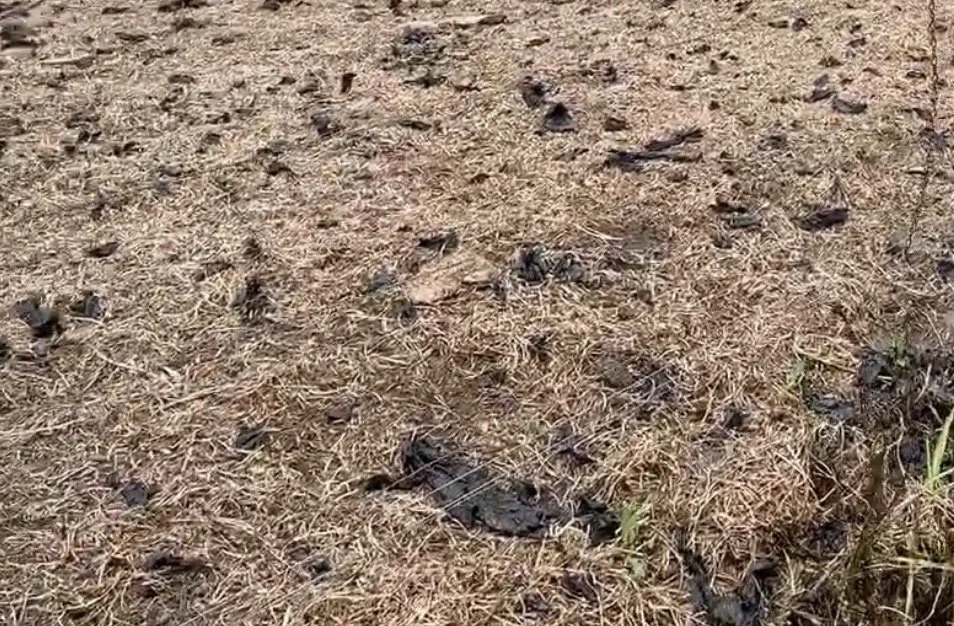
Fragmented plastic residues observed in a Georgia field in spring, following autumn soil incorporation of oxo-degradable mulch.
2. What True Biodegradation Means
True biodegradable mulch behaves differently.
Instead of breaking into smaller plastic pieces, it is consumed by microorganisms in the soil.
Through microbial activity, the material converts into:
• Water
• CO₂
• Biomass
No persistent plastic particles remain.
This is a biological process — not a mechanical one.
Fragmentation reduces size.
Biodegradation changes chemistry.
That distinction is fundamental.
3. The Oxo-Degradable Confusion
Oxo-degradable plastics are often presented as a solution.
They are not.
Oxo-additives accelerate fragmentation.
They help polyethylene break into smaller pieces faster.
But the polymer backbone remains plastic.
The result is faster microplastic generation — not biodegradation.
Accelerated fragmentation is not environmental progress.
It is simply faster plastic dust.
4. Long-Term Soil Impact
Microplastics in soil can have measurable long-term effects:
• Alter soil structure
• Interfere with microbial ecosystems
• Affect water retention
• Potentially enter plant root systems
Agricultural soil is a long-term asset.
Once microplastics accumulate, removal is nearly impossible.
This is not a one-season decision.
It is a multi-decade impact.
Soil integrity is cumulative. So is contamination.
Closing Section
The choice between fragmentation and biodegradation is not cosmetic.
It determines whether plastic remains in the soil — or returns to natural biological cycles.
Understanding that difference is essential for growers who care about soil integrity, long-term productivity, and regulatory evolution.