
Plastic Mulch Cost Per Acre
Many vegetable growers searching for plastic mulch cost per acre are trying to estimate the real economics of mulch systems before planting.
At first glance, the cost seems simple: install the mulch, grow the crop, and harvest.
But when farms begin calculating the full cost per acre, several additional components must be included.
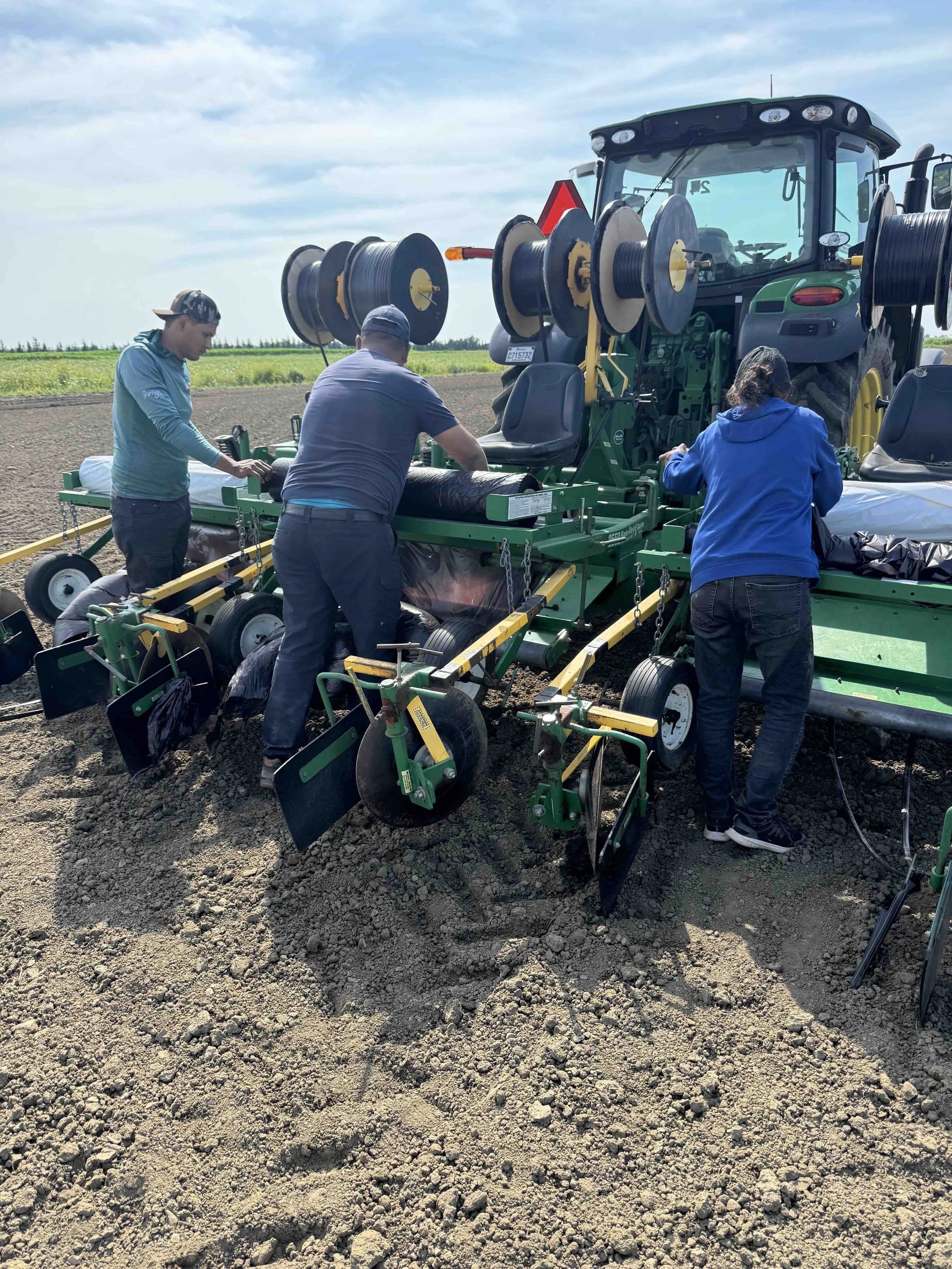
Farm workers installing plastic mulch and drip irrigation on raised beds using a tractor-mounted mulch layer, a common plasticulture system used in vegetable production.
Typical cost per acre
A typical plastic mulch system includes both mulch film and drip irrigation installed together on raised beds. When growers calculate the cost per acre, several components must be considered.
| Item | Typical Cost per Acre |
|---|---|
| Plastic mulch film | $200 – $350 |
| Drip irrigation tape | $200 – $300 |
| Installation labor | $40 – $80 |
| Equipment operation | $60 – $120 |
At this stage, many growers estimate plasticulture costs at $500–$850 per acre.
However, this estimate reflects only the installation phase of the system.
The cost most growers add later
At the end of the season, polyethylene mulch must be removed from the field.
This process typically requires:
• cutting and lifting the film
• pulling drip tape
• collecting contaminated plastic
• loading trailers
• transporting waste
• landfill disposal
Because used mulch is covered with soil and crop debris, recycling is rarely possible, and most agricultural plastic mulch is sent directly to landfill.
Labor alone can represent several full workdays per field block, and across a full vegetable operation the removal process often adds two to three weeks of labor each season.
Why many farms are re-evaluating mulch economics
When growers include removal labor, transport, and landfill disposal, the real cost of polyethylene mulch becomes significantly higher than the initial installation estimate.
For this reason, more farms are now evaluating mulch systems based on total lifecycle cost per acre, not only the price of the roll.
Some growers are also exploring compostable mulch systems that remain stable during the crop cycle and then biodegrade naturally in the soil after incorporation, eliminating the need to remove plastic from the field.
The Real Cost of Plastic Mulch Per Acre
When farms calculate the real cost of plastic mulch per acre, the conversation usually changes.
At first glance, plastic mulch seems inexpensive.
A roll of polyethylene film may look like a small part of the production budget.
But when the full system is considered — including:
installation labor
drip irrigation
equipment operation
plastic removal
transport
landfill disposal
the economics become very different.
On many vegetable farms, plastic mulch removal alone can represent two to three weeks of labor every season.
And after all that work, the plastic does not disappear.
Polyethylene mulch does not biodegrade.
It breaks up into microplastics that remain in the soil.
This is why many growers are beginning to evaluate mulch systems differently.
Instead of focusing only on the price of the roll, farms are starting to ask a more practical question:
What is the total cost per acre for the entire season?
For some farms, the answer is leading them toward systems where the mulch remains stable during the crop cycle and biodegrades naturally in the soil after incorporation, eliminating the need for plastic removal altogether.
Because in modern agriculture, the real question is no longer just:
“How cheap is the mulch roll?”
But rather:
“What does the whole system really cost per acre?”