
The Real Cost of Plastic Mulch Removal
Plastic mulch does not end at harvest.
That is when the real work begins.
Most growers compare mulch based on price per roll.
Very few calculate what happens at the end of the season.
And that’s where the numbers change.
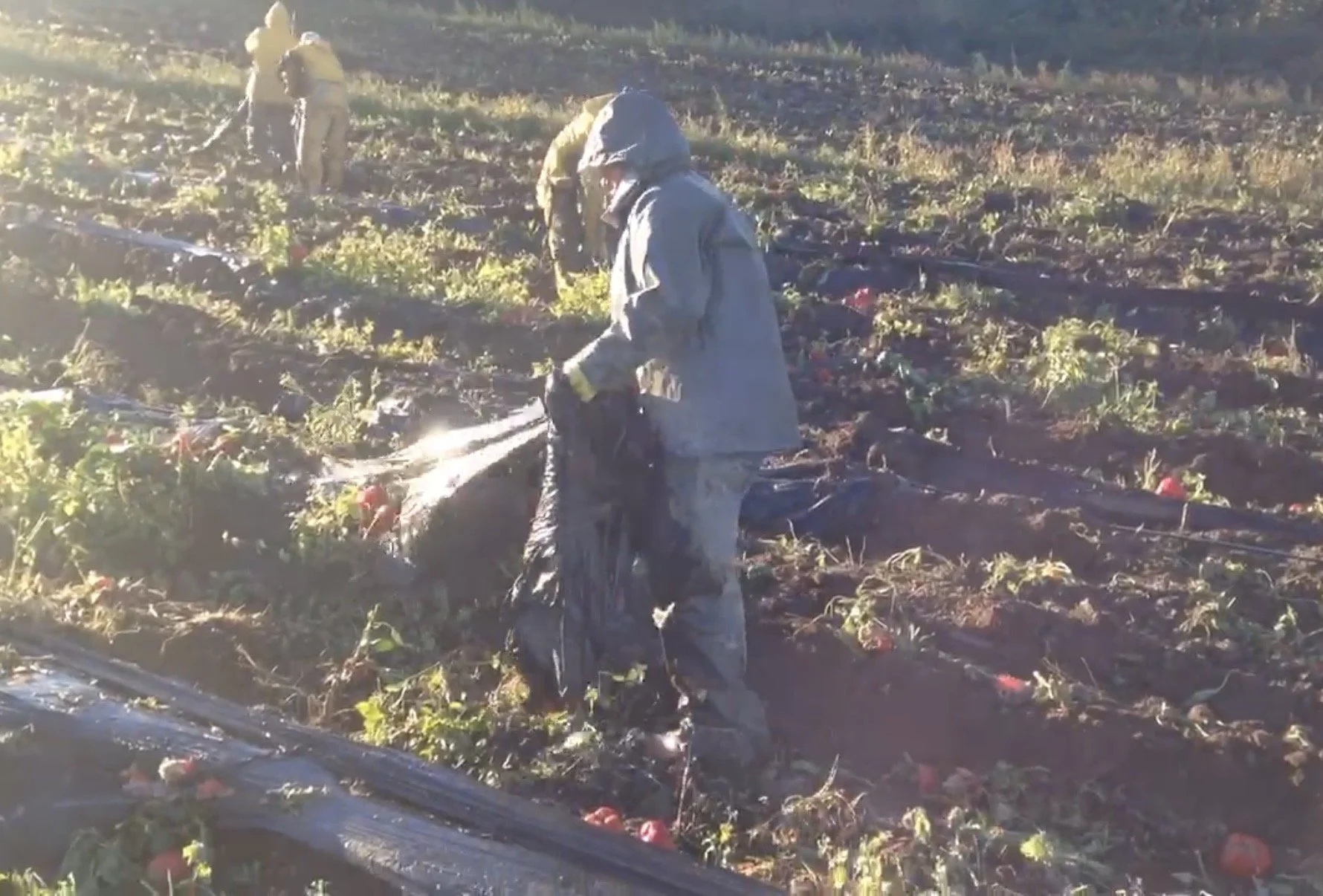
Manual removal of polyethylene mulch after harvest. Wet, soil-covered plastic requires significant labor, equipment handling, and disposal — adding hidden costs at the end of the growing season.
What Removal Actually Looks Like
Removing polyethylene mulch is not a simple pull-and-go operation.
It typically involves:
• Lifting and tearing
• Shaking soil from the film
• Cutting drip tape free
• Rolling and stacking
• Loading onto trailers
• Transporting
• Paying disposal fees
If the season was wet, the film is heavier.
If it tore during harvest, pieces are buried.
If labor is short, removal gets delayed.
And delays cost money.
The Labor Reality
In many regions, removal requires:
• 5–30 workers
• 10 to 20 full working days
• Equipment wear
• Fuel
• Trucking
For a medium-sized operation, that can represent:
Two to three weeks of labor per season.
Not installing.
Removing.
That time could be used for:
• Harvesting!
• Fall planting
• Equipment maintenance
• Irrigation work
• Rest
Instead, it goes into handling waste.
Disposal Is Not Free
Polyethylene does not biodegrade.
It fragments.
It becomes contaminated with soil.
It is rarely recyclable after field use.
So it goes to landfill.
Tipping fees vary by region.
Transportation adds cost.
Wet plastic increases weight.
None of this appears in the per-roll price.
The Compostable Difference
Compostable mulch systems are designed to biodegrade in soil.
After harvest:
• No pulling
• No hauling
• No disposal
• No landfill
The film is incorporated into the soil and biodegrades through microbial action.
Removal labor drops dramatically.
The economic comparison changes.
Price Per Roll vs. Price Per Season
The right question is not:
“What does the roll cost?”
The right question is:
“What does the season cost?”
When labor, fuel, equipment wear, and disposal are included,
the gap between polyethylene and compostable systems often narrows — or disappears.
In many cases, compostable mulch becomes economically competitive when full-season labor is accounted for.
And it removes plastic waste from the equation entirely.
A Smarter Way to Compare
If you want to evaluate the true economics of your current mulch system, ask:
• How many days does removal take?
• How many workers are involved?
• What is the hourly cost?
• What are your disposal fees per acre?
• What is the opportunity cost of that labor?
Most growers have never run the full calculation.
When they do, the numbers speak clearly.
Final Thought
Plastic mulch removal is treated as routine.
It shouldn’t be.
It is one of the most labor-intensive and waste-generating parts of the growing cycle.
There is another way to manage the end of the season.
If you want to compare your current removal cost per acre with a compostable system,
start with your acreage, crop, and region — and calculate the full picture.
Because mulch doesn’t end at harvest.
That’s where the real economics begin.