
What the FAO Says About Plastics in Agricultural Soil
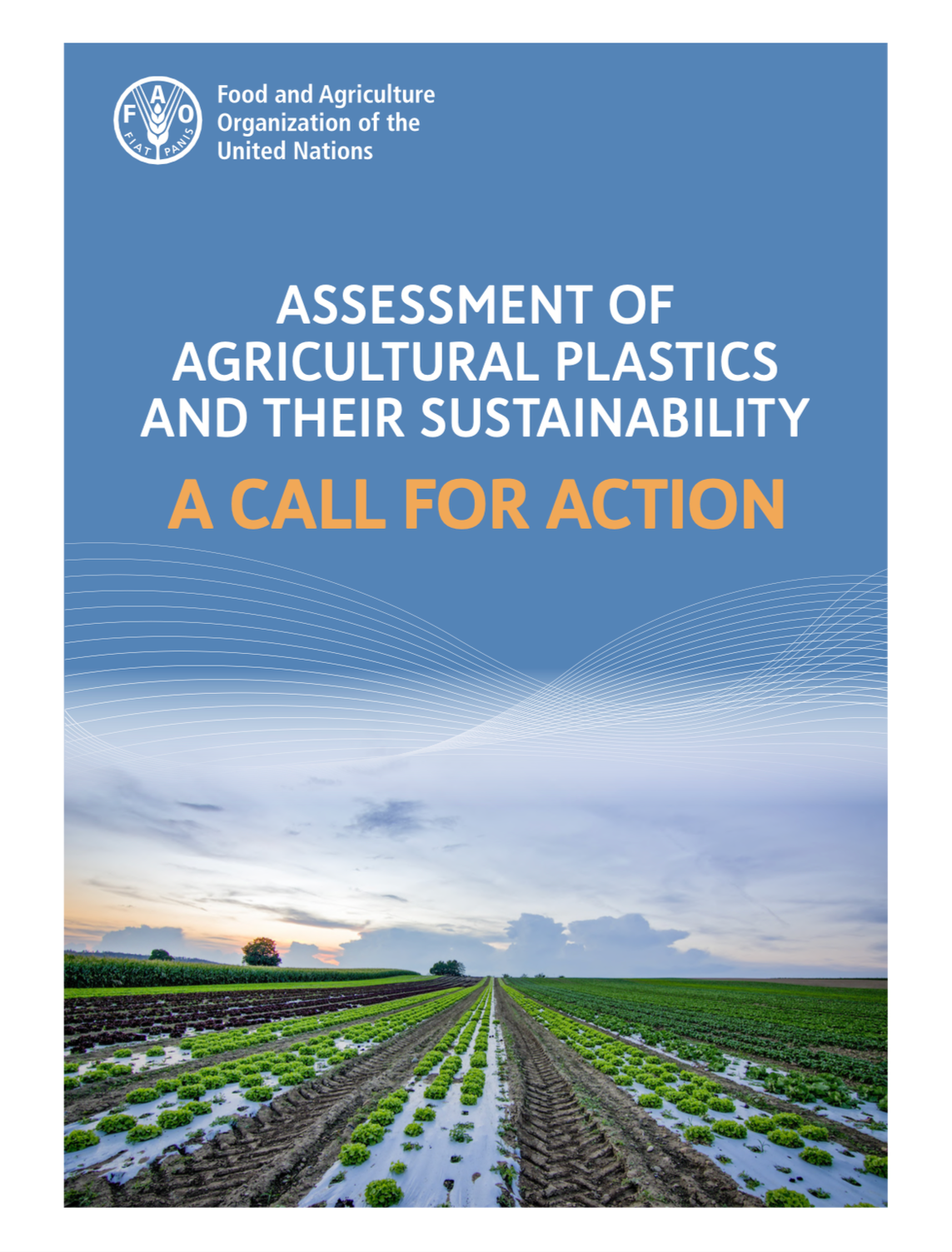
FAO Report (2021).
Agricultural plastics, soil accumulation, fragmentation vs. biodegradation, and the regulatory shift in Europe. A global call for standards and accountability in soil protection.
Fragmentation, Microplastics, and the Regulatory Shift in Europe
In 2021, the Food and Agriculture Organization of the United Nations (FAO) released a global assessment titled:
Assessment of Agricultural Plastics and Their Sustainability.
The report does not use activist language.
It uses technical language.
Its conclusion is clear:
Agricultural plastics are accumulating in soil — and fragmentation is a central concern.
A. Agricultural Soil Is Becoming a Plastic Reservoir
The FAO identifies agriculture as one of the largest users of plastic materials globally.
Mulch films, greenhouse covers, irrigation components, and crop protection materials are widely used.
Over time:
Mechanical stress
UV exposure
Tillage
Weathering
cause conventional plastics to break apart.
The report emphasizes:
Plastic in soil does not disappear.
It fragments into smaller particles.
These particles become microplastics and, eventually, nanoplastics.
Fragmentation is not biodegradation.
B. Fragmentation vs. True Biodegradation
The FAO draws a clear distinction:
Fragmentation:
Reduces size
Does not change chemical structure
Leaves persistent plastic particles in soil
Biodegradation:
Involves microbial activity
Converts material into CO₂, water, and biomass
Leaves no persistent plastic residue
The report stresses the importance of clear standards to distinguish materials that truly biodegrade in soil from those that merely fragment.
This is a chemistry issue — not a marketing issue.
C. The European Regulatory Signal: Oxo-Degradable Plastics
The FAO references regulatory developments in Europe.
In 2019, the European Union banned oxo-degradable plastics under the Single-Use Plastics Directive.
The reasoning was straightforward:
Oxo-degradable plastics accelerate fragmentation through pro-oxidant additives — but they do not demonstrate reliable, complete biodegradation in natural environments.
European regulators concluded that these materials contribute to microplastic pollution rather than solving it.
This regulatory decision reflects a broader shift:
Acceleration of fragmentation is not considered sustainability.
Proof of full biodegradation is required.
D. Why This Matters for Agricultural Systems
Agricultural soils are:
Reused year after year
Mechanically disturbed
Biologically active
If plastic fragments remain in soil:
They accumulate over time
They may alter soil structure
They may affect microbial communities
Their long-term agronomic impact remains under study
The FAO frames this not as a short-term waste issue —
but as a soil integrity issue.
Soil is not a disposal site.
E. The Strategic Question for Growers
The FAO does not promote specific products.
It does, however, call for:
Clear biodegradability standards
Improved end-of-life management
Reduction of plastic accumulation in soil
That leaves growers with a practical question:
Is the material used in the field designed to fragment —
or to fully biodegrade in soil conditions?
Because those two pathways lead to very different soil outcomes.
Conclusion
The FAO report is not anti-plastic.
It is pro-accountability.
Pro-standards.
Pro-soil protection.
The future of agricultural mulch will not be defined by thickness or short-term cost.
It will be defined by what remains in the soil —
or does not.
Source
Food and Agriculture Organization of the United Nations (FAO). 2021.
Assessment of Agricultural Plastics and Their Sustainability: A Call for Action.
Rome, FAO.
Full report (PDF):
https://www.fao.org/3/cb7856en/cb7856en.pdf